
Refurbish the Damper or Replace It? Compare the Installed Outcome
A lower equipment price is not the answer until field assembly, outage work, reliability upgrades and execution risk are included.
By INTEREP Engineering Team
Industrial Damper Refurbishment vs. Replacement: A Practical Decision Framework
The right comparison is not refurb quote versus new-equipment quote. It is safe, reliable operation at the end of the outage.
At a glance
- Define the failure and the reliability improvement you actually need before pricing anything.
- Compare total installed scope, not just equipment price.
- Resolve field assembly, lifting, controls, commissioning, and technical oversight before recommending the new-unit option.
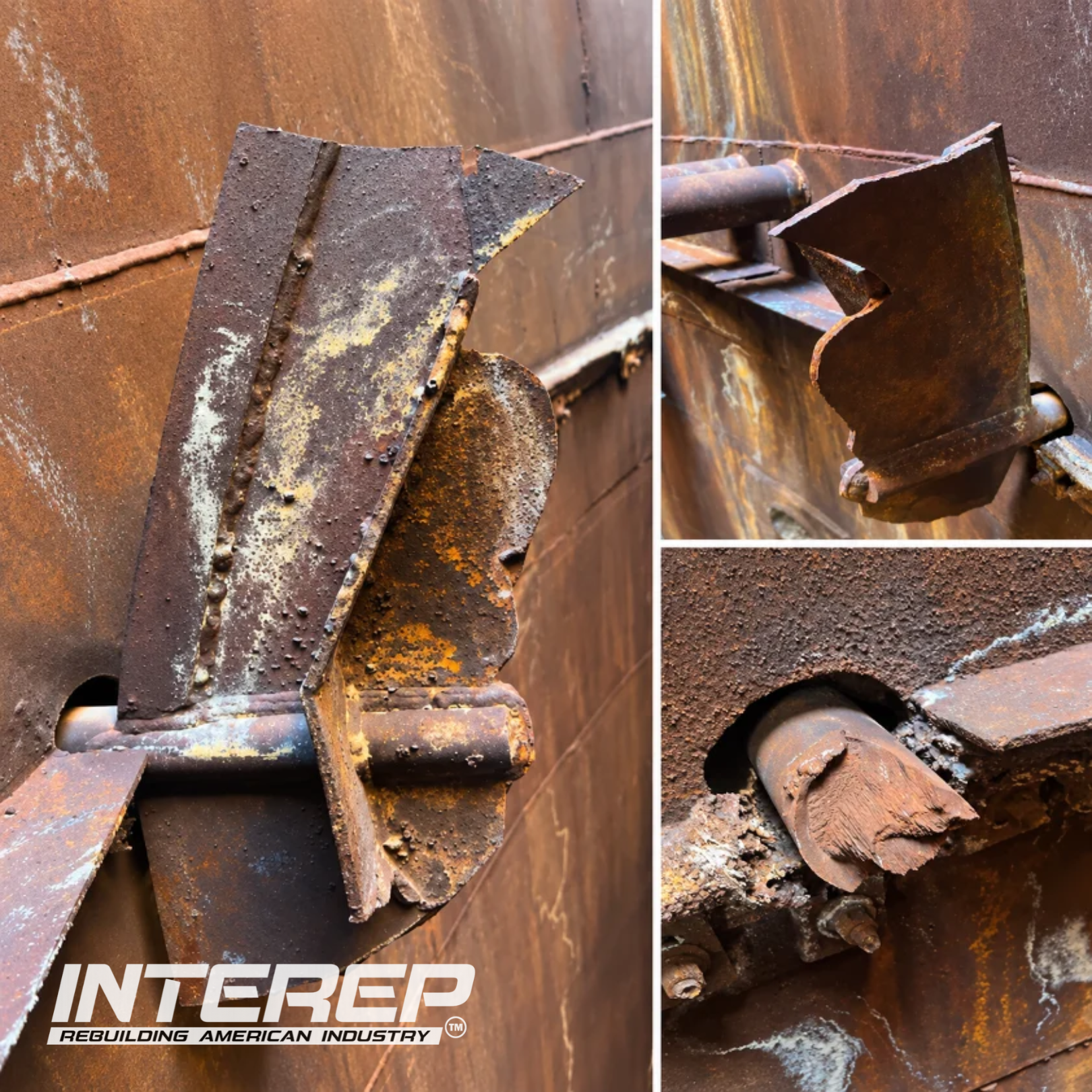
A blade had detached from a round louver stack damper after a shaft failure. Root cause was still unconfirmed, and the customer was open to a design improvement rather than an exact in-kind rebuild. That single fact reshaped the whole comparison: neither refurbishing the damaged parts nor replacing them with a copy of the original geometry would mean much until the load path through the shaft, blade, bearing, seal, and actuator was understood. Repeat the same design without understanding why it failed, and refurbishment or replacement can reproduce the same weak point.
Refurbishment can be the expensive option
In this case, an extensive field refurbishment was compared against a lower-priced new damper that would ship in sections and be assembled on site. On equipment price alone, the new unit looked like the easy win. But field assembly cost, schedule, contractor scope, and manufacturer oversight were all still open questions, and any of them could close the gap or reverse it.
That is the trap in comparing quotes at face value. A fair comparison has to include demolition, cleaning, structural repair, replacement parts, field machining, coatings, rigging, access, welding, electrical and controls work, assembly supervision, commissioning, contingency, and outage risk. Leave any of those out and the number on the page stops meaning much.
New equipment still needs a field execution plan
Shipping a damper in sections solves a transport problem, not an installation one. Most of the real work, and most of the risk, moves to site. Before recommending that route, it’s worth pinning down who assembles the frame, how alignment and blade clearances get checked, who sets the actuator and linkage, what welding or bolting is required, and which party owns commissioning.
Technical oversight only earns its cost when it comes with clear authority and clear deliverables. A good execution plan names its hold points, its measurements, its acceptance criteria, and the records that close out the job.
Reliability upgrades need a design basis
It’s tempting to bolt on improvements from a general checklist: a heavier shaft, a different blade construction, upgraded bearings or seals, better stops, a different actuator or linkage, easier access for inspection. None of that means anything without the specifics of the application: operating temperature, pressure differential, cycling, gas loading, fouling, corrosion, vibration, fail position, and maintenance history.
The comparison is only finished once both options, refurbishment and replacement, are measured against the same reliability target and the same installed acceptance criteria.
Decision framework
- Document the failure evidence, current condition, and any unresolved root-cause questions.
- Define the reliability target, operating conditions, and required outage window.
- Build one scope matrix that covers both refurbishment and replacement on equal terms.
- Add site work, assembly, rigging, controls, commissioning, oversight, and contingency to both sides.
- Select the option with the best verified installed outcome, then lock in hold points and acceptance evidence.
Engineering criteria, limits and caveats
- Hold off on publishing a root cause until the evidence actually supports it.
- Check shaft, blade, bearing, and actuator loads as one system, not in isolation.
- Include transport splits and field-fit requirements in the new-damper review.
- Identify owner, contractor, supplier, and INTEREP responsibilities before mobilization.
- Require cold-position, stroke, clearance, seal, and fail-position checks before startup.
- Confirm the field-assembly and technical-oversight scope for the current application.
Takeaways
Refurbishment is not automatically cheaper, and replacement is not automatically simpler. The number that matters is total installed cost at the end of the outage, and any reliability upgrade needs a design basis with checks you can actually verify.
Frequently asked questions
When is refurbishment a reasonable option?
When the frame and major components are fit for continued service, the damage is well understood, the repair scope is controllable, and the completed unit can meet the reliability target.
What makes a new damper expensive to install?
Shipping splits, field assembly, rigging, access, welding, controls integration, commissioning, and outage constraints can all add substantial scope that doesn’t show up in the equipment quote.
Should a failed damper be replaced in kind?
Not automatically. Review the failure evidence and operating conditions before repeating the original design.
What should technical oversight include?
Named hold points, assembly and alignment checks, actuator and linkage setup, acceptance criteria, records, and the authority to stop nonconforming work.
Which costs belong in the option comparison?
Equipment, engineering, removal, repair or assembly labor, access, lifting, controls, commissioning, oversight, contingency, and schedule risk.
Talk with INTEREP
Send INTEREP the damper drawings, operating conditions, failure photographs, inspection notes, and outage constraints. We’ll help you compare refurbishment and replacement on one installed-scope basis.
References and related INTEREP resources
Industrial Damper Refurbishment vs. Replacement